The 1980's
Presidents of the 1980's
Jimmy Carter: (1977-1981) While Carter was not a very popular president, and he lost to Reagan, he did successfully restore an effective system of checks and balances within the government. He also is well-known for his work to release 52 Americans who were held hostage for 444 days. However, he is unpopular because negative events are also associated with his presidency such as the war in Afghanistan, inflation, and the energy crisis. His presidency was also looked down upon as a result of a public scandal, and a recession resulted when his plan to be less dependent on other countries for oil backfired.
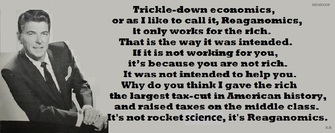
Ronald Reagan: (1981-1989) Most would consider this president to be the most influential president of the 1980s, for his clear opposition to communism, tight conservative ideas, and various plans for reform. He was against a big government and social welfare programs. This is why it is no surprise that his policy often referred to as "Reaganomics" only seems to work for the rich, and the "trickle-down" theory seems to never actually trickle-down to the lower class.
George H. W. Bush: (1989-1993) Due to his many achievements in foreign affairs, Bush has a great reputation when it comes to foreign issues, however when it comes to domestic affairs, he is not very popular. Under his presidency, he ran successful military operations in Panama and the Persian Gulf, the Berlin wall was demolished, and the Soviet Union fell. These are all great examples of his achievements with foreign affairs, and he did have some successful achievements with domestic affairs, he had a huge budget deficit, a lack of money to fund programs, and did not have any major ideas for reform. Also, Congress was primarily democratic, thus it was not easy for him being a republican to find common ground.
Supreme court cases with explanations
NJ v. TLO: (1980)
Background of case- Teacher found two girls smoking, and demanded to search the purse and found drugs and money. She then confesed to selling drugs.
Constitutional issue- Do students in school have the same rights under the fourth amendment as adults?
People involved-T.L.O., one other student, a teacher, and an assistant principal (names kept confidential)
Outcome-The court ruled in favor of the state of New Jersey and she was sent to juvenile hall and was ordered to do community service.
Background of case- Teacher found two girls smoking, and demanded to search the purse and found drugs and money. She then confesed to selling drugs.
Constitutional issue- Do students in school have the same rights under the fourth amendment as adults?
People involved-T.L.O., one other student, a teacher, and an assistant principal (names kept confidential)
Outcome-The court ruled in favor of the state of New Jersey and she was sent to juvenile hall and was ordered to do community service.
Hazelwood v. Kuhlmeier and explain: (1988)
Background of case- Journalism students wrote about controversial topics of the time including divorce and teen pregnancy, and the principal claimed they were inappropriate and removed entire pages of their articles from the paper.
Constitutional issue- Does the principal's decision to stop the publishing of certain "inappropriate" articles violate the students' first amendment right?
People involved- Students participating in a journalism class, the principal of Hazelwood East High
Outcome- U.S.Supreme court ruled that the students' rights were not violated
Background of case- Journalism students wrote about controversial topics of the time including divorce and teen pregnancy, and the principal claimed they were inappropriate and removed entire pages of their articles from the paper.
Constitutional issue- Does the principal's decision to stop the publishing of certain "inappropriate" articles violate the students' first amendment right?
People involved- Students participating in a journalism class, the principal of Hazelwood East High
Outcome- U.S.Supreme court ruled that the students' rights were not violated
Vocabulary
AIDS- (Acquired Immune Deficiency Syndrome) is a sexually transmitted disease that can occur after the HIV virus has entered the body. In its early discovery it was called GRID, which stands for Gay-Related Immune Deficiency. This was the spark of a new epidemic that many people feared, and a common misconception that only homosexuals can get AIDS, which also led to more gay rights campaigns.
Berlin Wall- A concrete wall that is heavily guarded separating West Germany from East Germany. The East Germans were considered to be the communists. The wall was in place to keep the East Germans from fleeing to West Germany. The wall was eventually demolished in 1989.
Black Monday- On October 19, 1987 stock prices on Wall Street collapsed, which led to the crash of markets internationally.
Challenger Disaster- The explosion of the Challenger Space Shuttle in Florida less than two minutes after its departure, which led to the deaths of seven astronauts on board.
CNN- The Cable News Network was founded in 1980 by Ted Turner. It is a 24 hour news station which is owned by a division of Time Warner Cable.
Cold War- This was not an actual war, but rather the political tension that existed between the Soviet Bloc (communist) countries, and the U.S. and Western powers from 1945 to 1990.
Computers- An electronic device used for processing and storing data. The first personal computers, or PCs, came out in the 1980s. This was the spark to the information age.
Exxon Valdez- An oil tanker that ran hit ground causing the largest oil spill in the history of the United States in the Prince William sound in Alaska on March 24, 1989.
Farm aid- A benefit concert that originally began in 1985 to help raise money for the All-American family farmers. It originated in Champaign, Illinois.
Ferraro, Geraldine- First female candidate for vice president, who was an attorney, a Democratic party politician, and a member of the United States House of Representatives.
Grain embargo- Policy that banned the export of grain to the Soviet Union after their invasion of Afghanistan in 1979.
Grenada- An invasion of Grenada (Caribbean island nation) led by the U.S. that that was won within a few weeks of the invasion. This was known as Operation Urgent Fury.
Illegal immigration- During the 1980s, illegal immigration became a hot topic of the many issues of the United States, particularly from Mexico.
INF treaty- The first nuclear arms treaty that decreased the number of nuclear arms, instead of placing a cap on how many they could have.
Iran-Contra affair- Scandal under Ronald Reagan's presidency of which he planned to secretly sell arms to Iran in exchange for the release of American hostages in Lebanon.
"Just Say No"- A campaign that was a part of the war on drugs that worked to prevent children and teenagers from using illegal drugs, by providing many different ways of saying no.
Lebanon (US Marines)- (October 1983) A truck full of explosives smashed into the gates of the marine barracks in Lebanon, which killed a total of 241 Americans.
Nicaragua- The U.S. supported various rebel groups in opposition to their government in Nicaragua both financially and militarily. Congress eventually banned this, but Reagan secretly continued this involvement, which was also a part of the Iran-Contra affair.
North, Oliver- U.S. marine colonel who graduated from the Naval Academy and was assigned to the National Security Council, and was involved in the Iran-Contra affair by sending money to Nicaragua.
O'Connor, Sandra Day- First female justice of the Supreme Court (1981).
PMRC- (Parents Music Resource Center) Committee founded in 1985 that aimed its goal at censoring music that was considered inappropriate for children that is either violent, involving drug references, or sexual references. They did this by labeling these albums with stickers that say "Parental Advisory."
Panama- The United States invaded the panama canal in 1989 to prevent the transfer of control over the Panama canal from the U.S. to Panama that was set to occur in 2000.
Powell, Colin- Appointed to National Security Affairs by Ronald Reagan, and helped to plan the invasion of Panama.
Reaganomics- Economic policies that existed under Ronald Reagan, that mostly involve unrestricted free-market trade, and reducing taxes.
Ride, Sally- First female astronaut and astrophysicist to successfully travel to outer space in 1983.
Silicon Valley- South Bay area of San Francisco that is considered to be the third most high-tech town in the nation. It is famous for innovation in computer and internet technology, and is influential over major corporations such as Xerox , Intel, Apple, Cisco, and Microsoft.
Space Shuttle Columbia- First Space Shuttle in NASA to go to outerspace that was considered "spaceworthy" or safe.
Strategic Defense initiative- Proposal by Ronald Reagan in 1983 to use both ground, and space-based systems of arms to keep the nation safe from attack from other nations' nuclear ballistic missiles.
US Olympics Boycott- Jimmy Carter gave the Soviet Union an ultimatum after their invasion of Afghanistan in January of 1980, that if they did not withdraw their troops within one month, then the U.S. would boycott the Olympics in Moscow.
Berlin Wall- A concrete wall that is heavily guarded separating West Germany from East Germany. The East Germans were considered to be the communists. The wall was in place to keep the East Germans from fleeing to West Germany. The wall was eventually demolished in 1989.
Black Monday- On October 19, 1987 stock prices on Wall Street collapsed, which led to the crash of markets internationally.
Challenger Disaster- The explosion of the Challenger Space Shuttle in Florida less than two minutes after its departure, which led to the deaths of seven astronauts on board.
CNN- The Cable News Network was founded in 1980 by Ted Turner. It is a 24 hour news station which is owned by a division of Time Warner Cable.
Cold War- This was not an actual war, but rather the political tension that existed between the Soviet Bloc (communist) countries, and the U.S. and Western powers from 1945 to 1990.
Computers- An electronic device used for processing and storing data. The first personal computers, or PCs, came out in the 1980s. This was the spark to the information age.
Exxon Valdez- An oil tanker that ran hit ground causing the largest oil spill in the history of the United States in the Prince William sound in Alaska on March 24, 1989.
Farm aid- A benefit concert that originally began in 1985 to help raise money for the All-American family farmers. It originated in Champaign, Illinois.
Ferraro, Geraldine- First female candidate for vice president, who was an attorney, a Democratic party politician, and a member of the United States House of Representatives.
Grain embargo- Policy that banned the export of grain to the Soviet Union after their invasion of Afghanistan in 1979.
Grenada- An invasion of Grenada (Caribbean island nation) led by the U.S. that that was won within a few weeks of the invasion. This was known as Operation Urgent Fury.
Illegal immigration- During the 1980s, illegal immigration became a hot topic of the many issues of the United States, particularly from Mexico.
INF treaty- The first nuclear arms treaty that decreased the number of nuclear arms, instead of placing a cap on how many they could have.
Iran-Contra affair- Scandal under Ronald Reagan's presidency of which he planned to secretly sell arms to Iran in exchange for the release of American hostages in Lebanon.
"Just Say No"- A campaign that was a part of the war on drugs that worked to prevent children and teenagers from using illegal drugs, by providing many different ways of saying no.
Lebanon (US Marines)- (October 1983) A truck full of explosives smashed into the gates of the marine barracks in Lebanon, which killed a total of 241 Americans.
Nicaragua- The U.S. supported various rebel groups in opposition to their government in Nicaragua both financially and militarily. Congress eventually banned this, but Reagan secretly continued this involvement, which was also a part of the Iran-Contra affair.
North, Oliver- U.S. marine colonel who graduated from the Naval Academy and was assigned to the National Security Council, and was involved in the Iran-Contra affair by sending money to Nicaragua.
O'Connor, Sandra Day- First female justice of the Supreme Court (1981).
PMRC- (Parents Music Resource Center) Committee founded in 1985 that aimed its goal at censoring music that was considered inappropriate for children that is either violent, involving drug references, or sexual references. They did this by labeling these albums with stickers that say "Parental Advisory."
Panama- The United States invaded the panama canal in 1989 to prevent the transfer of control over the Panama canal from the U.S. to Panama that was set to occur in 2000.
Powell, Colin- Appointed to National Security Affairs by Ronald Reagan, and helped to plan the invasion of Panama.
Reaganomics- Economic policies that existed under Ronald Reagan, that mostly involve unrestricted free-market trade, and reducing taxes.
Ride, Sally- First female astronaut and astrophysicist to successfully travel to outer space in 1983.
Silicon Valley- South Bay area of San Francisco that is considered to be the third most high-tech town in the nation. It is famous for innovation in computer and internet technology, and is influential over major corporations such as Xerox , Intel, Apple, Cisco, and Microsoft.
Space Shuttle Columbia- First Space Shuttle in NASA to go to outerspace that was considered "spaceworthy" or safe.
Strategic Defense initiative- Proposal by Ronald Reagan in 1983 to use both ground, and space-based systems of arms to keep the nation safe from attack from other nations' nuclear ballistic missiles.
US Olympics Boycott- Jimmy Carter gave the Soviet Union an ultimatum after their invasion of Afghanistan in January of 1980, that if they did not withdraw their troops within one month, then the U.S. would boycott the Olympics in Moscow.